Kotlin与Spring Boot(一)
环境配置
参数配置
官方教程配置
| 参数名称 | 参数配置 |
|---|---|
| 项目名称 | demo |
| 项目语言 | Kotlin |
| 打包方式 | Gradle - Kotlin |
| JDK | Java JDK (Amazon Corretto v23) |
| Java | 17+ |
| 依赖名称 | 依赖选项 |
|---|---|
| Web | Spring Web |
| SQL | Spring Data JDBC |
| SQL | H2 Database |
本人配置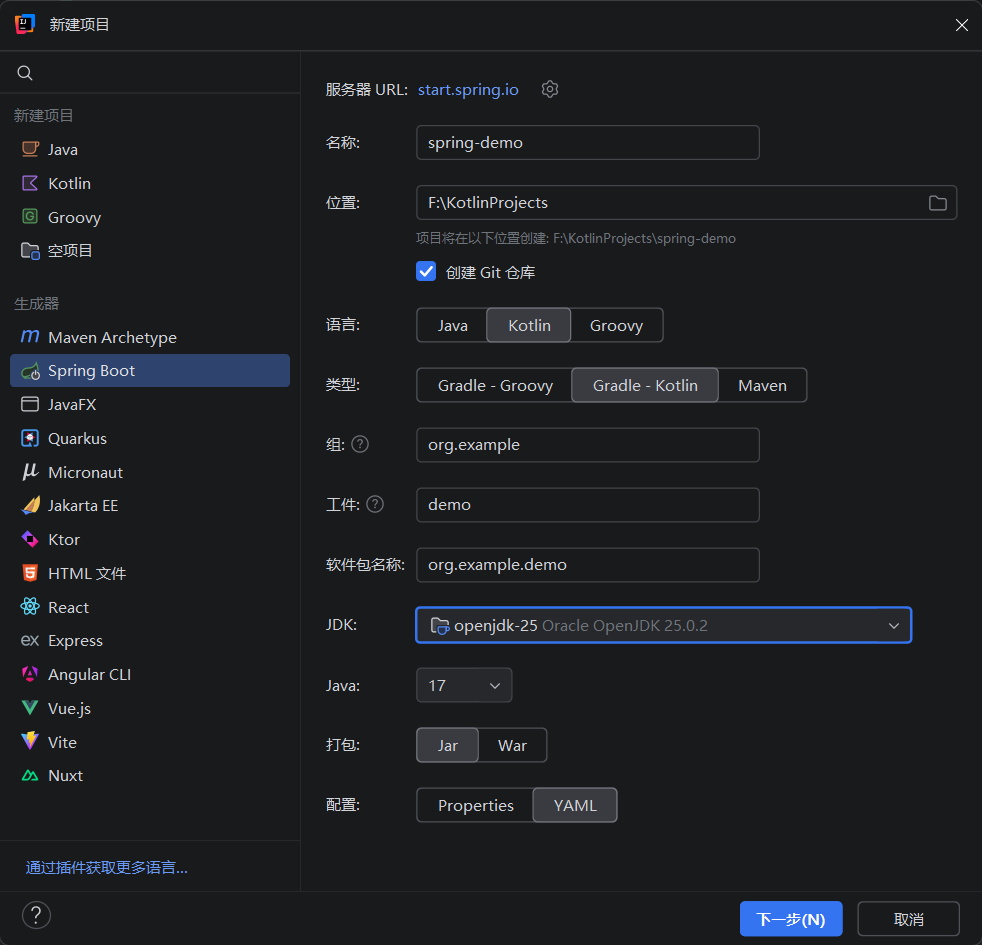
习惯yaml了,所以配置文件也用yaml的
H2 Database
H2数据库是轻量级、高性能的Java嵌入式数据库,具有如下优点:
零配置(Zero Config):Spring Boot 只要发现路径下有 H2 的包,就会自动帮你配置好
DataSource。你甚至不需要在application.properties里写连接字符串。兼容性强:它支持 "MySQL Mode" 或 "PostgreSQL Mode"。这意味着你在练习时写的是 H2,但未来换成生产环境的 MySQL 时,代码几乎不用改。
可视化:它自带一个网页版的控制台。你只需要访问
localhost:8080/h2-console,就能直接查表,体验和 Navicat 差不多。
build.gradle.kts构建脚本内容简述
插件板块 (The plugins block)
插件就像是给编译器安装的“增强模组”。
kotlin("jvm"): 这是基础。它告诉 Gradle 这是一个 Kotlin 项目,并指定了编译器版本,确保你的代码能被编译成运行在 Java 虚拟机(JVM)上的字节码。kotlin("plugin.spring")(All-open 插件): 这是最关键的一环。 在 Kotlin 中,类默认是final的(不可被继承)。但 Spring 的很多核心功能(如@Transactional或 AOP)需要通过创建子类代理来实现。 这个插件会自动为标注了 Spring 注解的类添加open修饰符,让你不需要手动在每个类前面写open。
plugins {
    kotlin("jvm") version "2.2.21"
    kotlin("plugin.spring") version "2.2.21"
    id("org.springframework.boot") version "4.0.3"
    id("io.spring.dependency-management") version "1.1.7"
}

group = "org.example"
version = "0.0.1-SNAPSHOT"
description = "spring-demo"

java {
    toolchain {
        languageVersion = JavaLanguageVersion.of(17)
    }
}

repositories {
    mavenCentral()
}

dependencies {
    implementation("org.springframework.boot:spring-boot-h2console")
    implementation("org.springframework.boot:spring-boot-starter-data-jdbc")
    implementation("org.springframework.boot:spring-boot-starter-webmvc")
    implementation("org.jetbrains.kotlin:kotlin-reflect")
    implementation("tools.jackson.module:jackson-module-kotlin")
    runtimeOnly("com.h2database:h2")
    testImplementation("org.springframework.boot:spring-boot-starter-data-jdbc-test")
    testImplementation("org.springframework.boot:spring-boot-starter-webmvc-test")
    testImplementation("org.jetbrains.kotlin:kotlin-test-junit5")
    testRuntimeOnly("org.junit.platform:junit-platform-launcher")
}

kotlin {
    compilerOptions {
        freeCompilerArgs.addAll("-Xjsr305=strict", "-Xannotation-default-target=param-property")
    }
}

tasks.withType<Test> {
    useJUnitPlatform()
}
依赖板块 (The dependencies block)
这里列出了你的项目所依赖的外部库。
jackson-module-kotlin: Jackson 是 Spring 默认的 JSON 解析器。由于 Kotlin 的数据类(Data Classes)和构造函数与 Java 不同,这个模块能让 Jackson 完美识别 Kotlin 的非空类型和默认参数。kotlin-reflect: 反射允许程序在运行时检查自己的结构。Spring 框架极度依赖反射来发现@Service、@RestController等组件。这个库为 Kotlin 的高级特性(如可空性属性和扩展函数)提供了完整的反射支持。
配置块 (The kotlin block)
在这里你可以对编译器进行“微调”。例如,你可以开启之前提到的 Opt-in 功能,而不必在每个文件里写注解:
kotlin {
    compilerOptions {
        freeCompilerArgs.add("-opt-in=kotlin.time.ExperimentalTime")
    }
}
前言
项目自动生成的Spring Boot Application
package org.example.demo

import org.springframework.boot.autoconfigure.SpringBootApplication
import org.springframework.boot.runApplication

@SpringBootApplication
class SpringDemoApplication

fun main(args: Array<String>) {
    runApplication<SpringDemoApplication>(*args)
}- 声明
SpringDemoApplication类
在Kotlin中,如果一个类没有任何成员(字段或方法),那么可以省略{}class body - 使用
@SpringBootApplication注解
在Spring Boot中,@SpringBootApplication注解用于开启自动配置、组件扫描,甚至可以在application class上自定义额外配置 - 程序入口
fun main()main函数是程序的入口。顶级/top levelmain函数被声明在SpringDemoApplication的外部、org.example.demo包的级别;main函数封装了Spring的runApplication,用于启动Spring Framework application main函数的参数Array<String>
这意味着你可以通过CLI向Spring传递一系列参数- 数组展开符号
*argsmain函数参数args的类型是字符串数组。既然它是字符串数组,而你想将它的内容传递给runApplication函数,你可以使用展开操作符 (在数组变量前面加上*号)
Hello World
创建一个Controller
在Spring框架中,Controller是用来处理web请求的。在com.example.demo(和Main.kt一个层级)下创建MessageController.kt:
import org.springframework.web.bind.annotation.GetMapping
import org.springframework.web.bind.annotation.RequestParam
import org.springframework.web.bind.annotation.RestController

@RestController
class MessageController {
    @GetMapping("/")
    fun index (
        @RequestParam("name")
        name: String
    ) = "Hello, $name"
}@RestController注解
指定所装饰的类为Spring Controller类;这个注解意味着该组件将能被Spring扫描出来,因为它和Main.kt就是一个包级别的
Kotlin的普通类(不是抽象类)默认是final的,不可被继承的——而Spring的机制就是要继承Controller类之后实现一个新的子类,并调用这个子类处理请求,所以原生Kotlin + Spring在使用@RestController注解后还需要加上open关键字,修饰当前类为可继承的。kotlin-allopen插件可以自动处理这个流程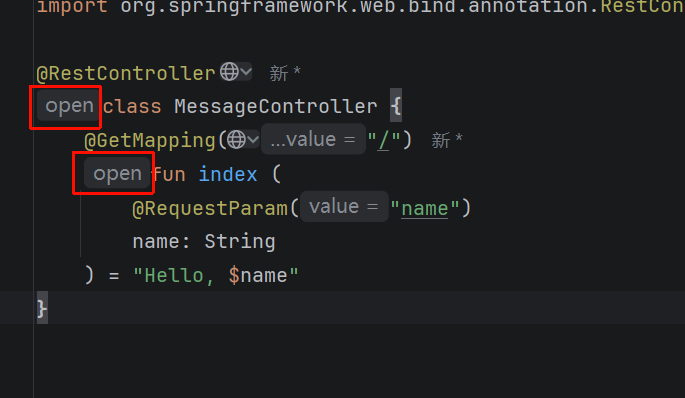
@GetMapping注解
标记给定函数为实现了HTTP GET接口的方法fun index ( @RequestParam("name") name: String ) = "Hello, $name"@RequestParam注解
标记给定变量应当与哪个名称的参数绑定- 单行函数
index()
Kotlin语法糖,当函数体只有一行时,可以省略{}函数体,改为在函数类型后面写上= single-line expression;Kotlin同时会推导函数返回值类型,这里推导为String,因为写上去的是字符串,字符串本身就能evaluate,Kotlin将此作为函数返回值 - Kotlin字符串模板语法
Hello, $name$name:引用变量${...}:引用表达式(函数、表达式)的求值,例如${user?.name: "unknown"}

0秒猜出默认端口
Data Class在Spring中的应用
还是在Main.kt同目录下,创建一个Message.kt文件:
package org.example.demo

data class Message (val id: String?, val text: String)Message类将被用于传递一系列序列化为JSON文档后的Message对象,用于MessageControll的API
- 数据类
data class xxx创建一个数据类,数据类相比普通类自带toString、copy和equals等方法 val和var关键字
前者用于声明引用固定的变量,后者用于声明引用可变的变量;引用可变不可变与变量本身能否变化无关,比如val ml = mutableListOf("A", "B", "C")创建出来的MutableList就是能使用add和remove方法的,和val不val的无关- 可空类型
String?
变量可以为null,后面对变量的访问和方法调用都必须显式处理null值情况,即使业务逻辑里那些可空属性一直都不可空
在MessageController.kt中,移除index()函数,改为:
import org.springframework.web.bind.annotation.GetMapping
import org.springframework.web.bind.annotation.RequestMapping
import org.springframework.web.bind.annotation.RestController

@RestController
@RequestMapping("/")
class MessageController {
    @GetMapping
    fun listMessages() = listOf(
        Message("1", "Hello!"),
        Message("1", "Bonjour!"),
        Message("3", "Private!"),
    )
}listOf函数
接受可变长度参数列表,创建不可变列表变量

提示
在 Spring 应用程序中,如果类路径(classpath)中存在 Jackson 库,任何控制器(controller)默认都会渲染 JSON 响应。由于你在 build.gradle.kts 文件中指定了 spring-boot-starter-webmvc 依赖,Jackson 已作为传递性依赖(transitive dependency)被引入。因此,如果端点(endpoint)返回的是一个可以被序列化为 JSON 的数据结构,应用程序就会以 JSON 文档的形式进行响应。
术语补充
传递性依赖 (Transitive Dependency): 你不需要手动添加
jackson-databind。当你引入spring-boot-starter-webmvc时,它内部已经包含了 Jackson。这就像你买了一套“西装套餐”,衬衫和领带是自动包含在里面的。内容协商与序列化: Spring 探测到 Jackson 后,会自动配置
MappingJackson2HttpMessageConverter。当你让一个函数返回一个 Kotlin 数据类 (Data Class) 时,Jackson 会通过反射读取属性,并将其转换为{"key": "value"}格式。默认行为: 这就是 Spring Boot “约定优于配置”的体现。只要库在那里,它就假设你想要 JSON。
添加数据库支持
在基于 Spring 框架的应用程序中,通用的做法是在所谓的服务层(Service Layer) 内实现数据库访问逻辑——这里是业务逻辑所在的地方。在 Spring 中,你应该使用 @Service 注解来标记类,以暗示该类属于应用程序的服务层。在本章节中,你将为此创建一个 MessageService 类。
还是在Main.kt同目录下,创建MessageService.kt文件:
import org.springframework.jdbc.core.JdbcTemplate
import org.springframework.stereotype.Service
import java.util.UUID

@Service
class MessageService(private val db: JdbcTemplate) {
    fun findMessage() = db.query("select * from messages") {
        resp, _ ->
        Message(resp.getString("id"), resp.getString("text"))
    }

	fun save(message: Message): Message {
	    val id = message.id?: UUID.randomUUID().toString()
	    db.update (
	        "insert into messages values (?, ?)",
	        id, message.text
	    )
	    return message.copy(id = id)
	}
}db.query第二个参数对应rowMapper,是一个回调函数——这里因为回调函数同时是函数的db.query的最后一个参数,因此看上去是挂在db.query()外面的lambda函数,也就是trailing lambda特性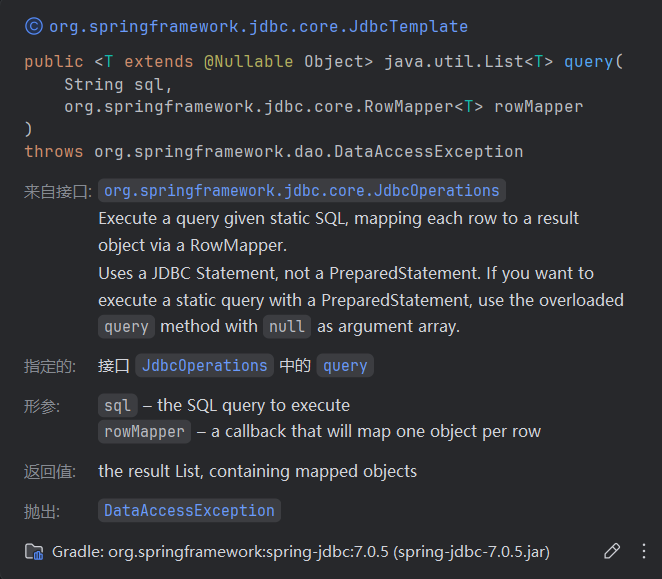
更新MessageController类
import org.springframework.http.ResponseEntity
import org.springframework.web.bind.annotation.*
import java.net.URI

@RestController
@RequestMapping("/")
class MessageController(private val service: MessageService) {
    @GetMapping
    fun listMessages() = service.findMessage()

    @PostMapping
    fun post(@RequestBody message: Message): ResponseEntity<Message> {
        val savedMessage = service.save(message)
        return ResponseEntity.created(
            URI("/${savedMessage.id?: "unknown-id"}")
        ).body(savedMessage)
    }
}@PostMapping注解
The method responsible for handling HTTP POST requests needs to be annotated with@PostMappingannotation. To be able to convert the JSON sent as HTTP Body content into an object, you need to use the@RequestBodyannotation for the method argument. Thanks to having the Jackson library in the classpath of the application, the conversion happens automatically.
标记用于处理HTTP POST请求的方法。为了将JSON格式的消息体数据转换为对象,你需要给方法参数加上@RequestBody注解。多亏了类路径里的Jackson,这一转换过程是自动发生ResponseEntityResponseEntityrepresents the whole HTTP response: status code, headers, and body.
Using thecreated()method you configure the response status code (201) and set the location header indicating the context path for the created resource.ResponseEntity可以存储整一个HTTP返回值:状态码、响应头和消息体
使用created()方法,你可以配置状态码(201 Created),并设置重定向路径
配置数据库
- 在
src/main/resources/目录下创建schema.sql文件。.sql文件用于存储数据库对象定义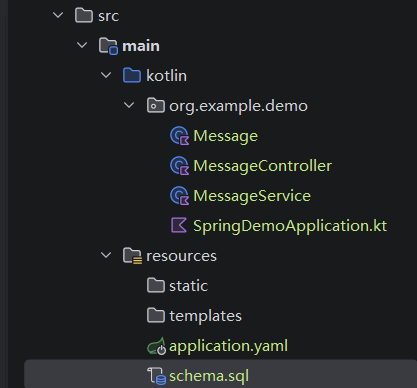
- 更新
schema.sql文件:create table if not exists messages ( id varchar(60) primary key, text varchar not null
); 3. 打开`src/main/resources`目录下的`application.properties`,添加如下配置: yaml
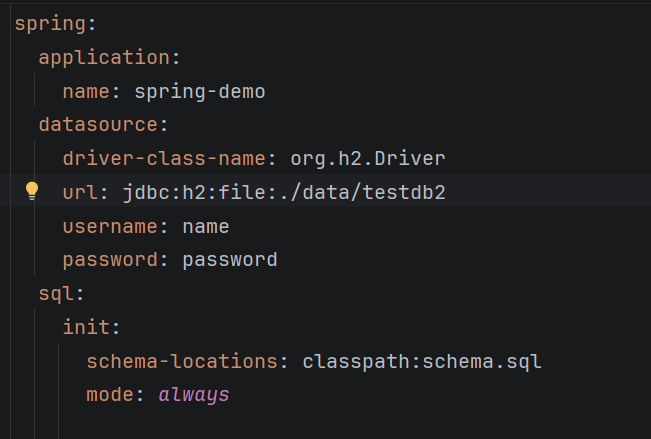
spring:
application:
name: spring-demo
datasource:
driver-class-name: org.h2.Driver
url: jdbc:h2:file:./data/testdb
username: name
password: password
sql:
init:
schema-locations: classpath:schema.sql
mode: always
```
这些设置会启用Spring程序的数据库。详情请见
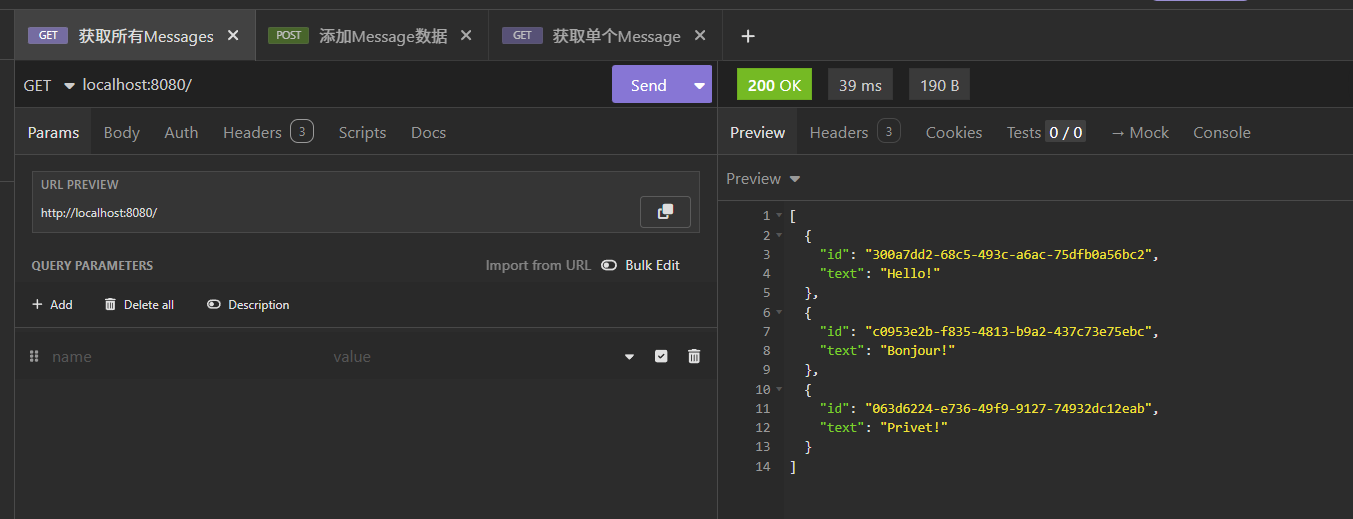
通过HTTP请求添加Message数据到数据库
在根目录下创建requests.http文件并添加下面的HTTP请求:
### Post "Hello!"
POST http://localhost:8080/
Content-Type: application/json

{
  "text": "Hello!"
}

### Post "Bonjour!"

POST http://localhost:8080/
Content-Type: application/json

{
  "text": "Bonjour!"
}

### Post "Privet!"

POST http://localhost:8080/
Content-Type: application/json

{
  "text": "Privet!"
}

### Get all the messages
GET http://localhost:8080/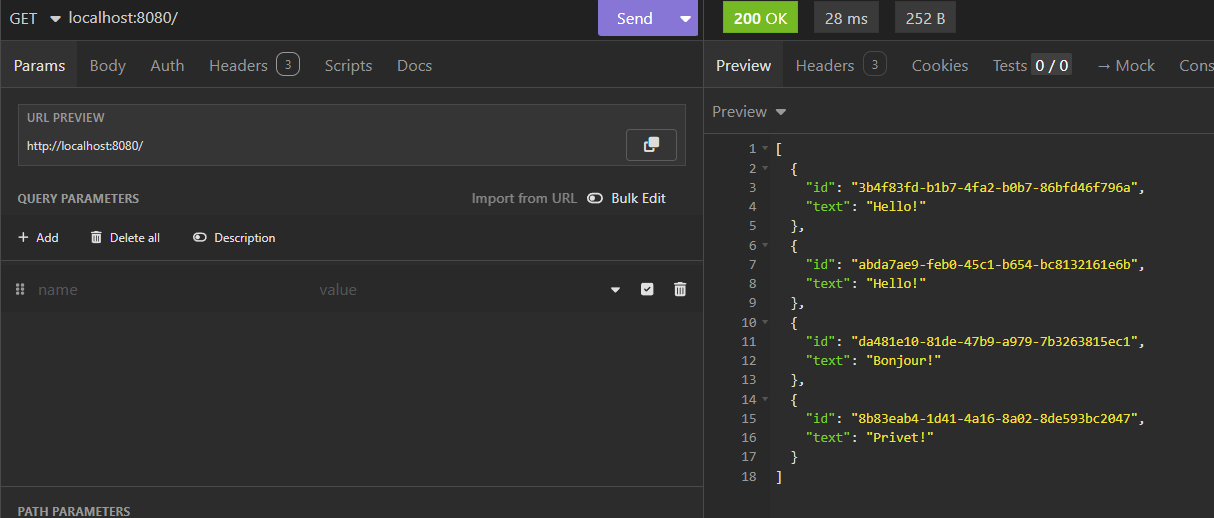
通过ID获得消息
拓展业务逻辑,实现findMessageById
- 在
MessageService类中添加findMessageById(id: String)import org.springframework.jdbc.core.JdbcTemplate import org.springframework.jdbc.core.query import org.springframework.stereotype.Service import java.util.UUID @Service class MessageService(private val db: JdbcTemplate) { fun findMessage() = db.query("select * from messages") { resp, _ -> Message(resp.getString("id"), resp.getString("text")) } fun findMessageById(id: String): Message? = db.query("select * from messages where id = ?", id) { resp, _ -> Message(resp.getString("id"), resp.getString("text")) }.singleOrNull() fun save(message: Message): Message { val id = message.id?: UUID.randomUUID().toString() db.update ( "insert into messages values (?, ?)", id, message.text ) return message.copy(id = id) } }singleOrNull:列表的方法,仅当列表中只有一个对象且该对象不为null时有返回值,否则,若列表中没有元素或有多个元素时返回nullMessage?:Message的可空类型,这里显式标出来方便理解findMessageById用到的query函数需要额外的依赖导入import org.springframework.jdbc.core.query,是由Spring提供的Kotlin拓展
- 在
MessageController中添加新的index路由:@GetMapping("/{id}") fun get(@PathVariable id: String) = service.findMessageById(id).toResponseEntity() private fun Message?.toResponseEntity() = this?.let { ResponseEntity.ok(it) }?: ResponseEntity.notFound().build<Message>()@PathVariable:标记给定字段为动态路径参数?.let:Message返回值不为空时执行let块中的函数?.let后面的?::返回值为空就走这个分支,构造 404 响应块- 不使用拓展函数,而是直接在
service.findMessageById(id)后面写?: ResponseEntity.notFound()的话,在搜索不到数据的时候会给个200 空消息体响应,不知道为什么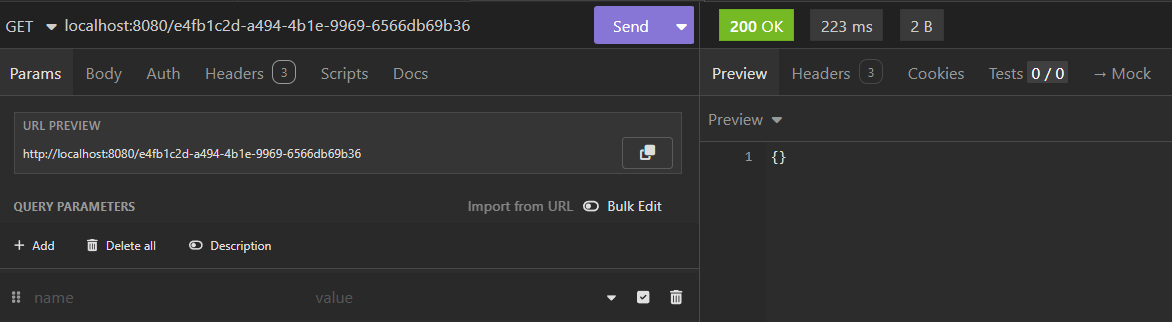
- 不使用拓展函数,而是直接在
- 可空类型的拓展函数
拓展函数的所有者可以为可空类型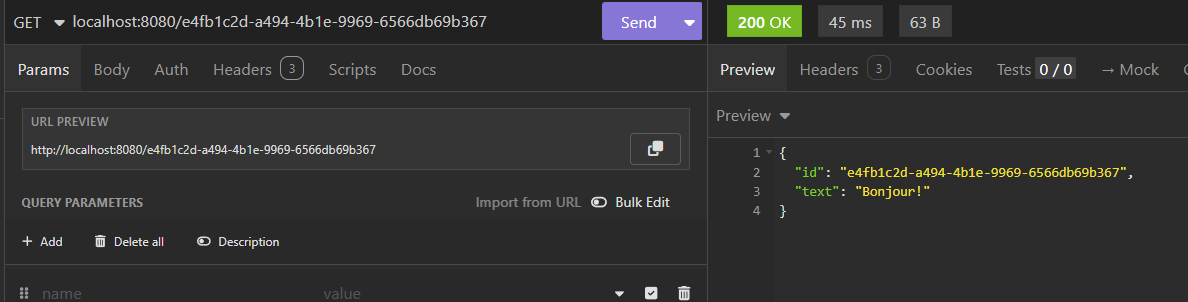
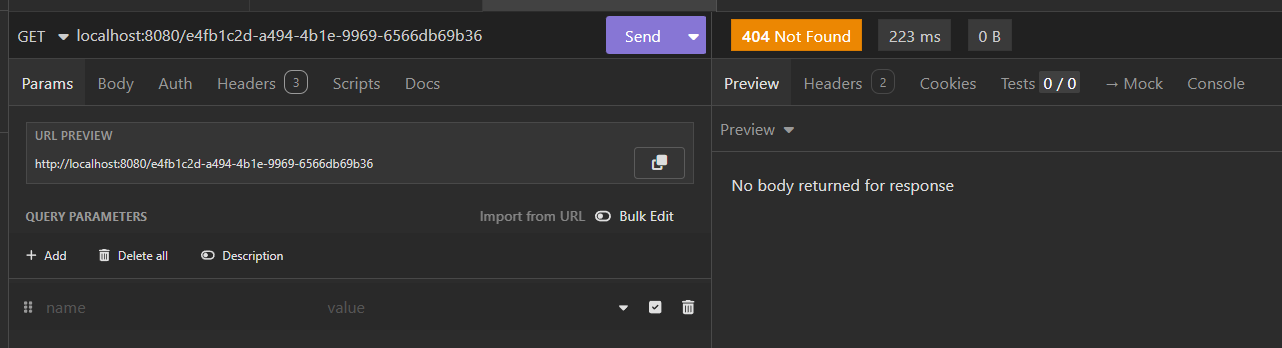
使用拓展私有函数拓展Controller之后,才修复蜜汁空消息体的问题
使用Spring Data CrudRepository
在这一节中,你将把服务层(service layer)进行迁移,使用 Spring Data CrudRepository 代替 JdbcTemplate 来进行数据库访问。CrudRepository 是一个 Spring Data 接口,用于对特定类型的仓库(repository)执行通用的 CRUD(增、删、改、查)操作。它提供了一系列开箱即用的方法,用于与数据库进行交互。
JdbcTemplate vs CrudRepository
JdbcTemplate:你需要自己编写 SQL 语句(如SELECT * FROM messages),手动处理结果集(ResultSet)并将其映射到对象。虽然灵活,但代码冗余量大。CrudRepository:你只需定义一个接口并继承它。Spring Data 会在运行时自动为你生成实现逻辑。你不需要写一行 SQL 就能实现基础功能。
Spring Data 的魔力:方法名派生
除了标准方法,CrudRepository 还支持通过方法名自动生成查询。例如,在 Kotlin 接口中定义 fun findByText(text: String): List<Message>,Spring 会自动解析并生成对应的 SQL,无需手动配置。
更新程序
首先需要修改Message类以适应CrudRepositoryAPI:
- 给
Message类加上@Table注解,将Message映射到数据表上;并给id字段加上@Id注解:
这些注解都需要额外的导入语句import org.springframework.data.annotation.Id import org.springframework.data.relational.core.mapping.Table @Table("MESSAGES") data class Message (@Id val id: String? = null, val text: String)id: String ?= null:显式加上默认值null,提高可读性
- 创建
MessageRepository.kt文件,声明MessageRepository接口(管理Message表相关的CRUD逻辑)并实现CrudRepository接口:import org.springframework.data.repository.CrudRepository interface MessageRepository: CrudRepository<Message, String>CrudRepository需要两个泛型参数:<DataObject> T和<ID> ID
- 更新
MessageService类,使用MessageRepository而非执行原生SQL语句:import org.springframework.data.repository.findByIdOrNull import org.springframework.stereotype.Service import java.util.UUID @Service class MessageService(private val db: MessageRepository) { fun findMessage(): List<Message> = db.findAll().toList() fun findMessageById(id: String): Message? = db.findByIdOrNull(id) fun save(message: Message): Message = db.save(message) }findByIdOrNull:给Spring Data JDBC的CrudRepository的扩展函数CrudRepositor<T>.save()函数:
This function works with an assumption that the new object doesn't have an id in the database. Hence, the id should be null for insertion.
If the id isn't null,CrudRepositoryassumes that the object already exists in the database and this is an update operation as opposed to an insert operation. After the insert operation, theidwill be generated by the data store and assigned back to theMessageinstance.
函数默认新对象在数据库中没有记录。因此,对象插入时不应该携带id
如果id不为空,CrudRepository会假定数据库中已经存在给定对象,并将插入操作更换为更新操作,数据库会顺便取出id,并将其赋回给Message实例
- 更新
schemq.sql中的数据表定义;鉴于id是字符串类型,所以可以使用RANDOM_UUID()函数来生成IDcreate table if not exists messages ( id varchar(60) default RANDOM_UUID() primary key, text varchar not null ); - 最后更新
application.properties: